The course addresses the English language needs of the students at the undergraduate level. The focus will be on five categories: Prose, Poetry, Vocabulary, Soft Skills, and Grammar. In addition to these each unit contains an activity that focuses on developing the speaking skills of students. Overall, the course will focus on the critical thinking faculties of the students concerning academic, linguistic, political, literary, and ethical concepts.
- Teacher: Dr RAJITA ANAND SINGH
COURSE SUMMARY
This course is designed to provide BBA students with a strong foundation in the concepts, principles, and practices of marketing. It introduces the nature and scope of marketing, customer needs and value creation, marketing philosophies, and the marketing mix. Students will learn how organizations analyze the marketing environment, identify target markets through segmentation, targeting, and positioning (STP), and develop effective marketing strategies.
The course also covers product and pricing decisions, integrated marketing communications, distribution channels, logistics, and supply chain management. In addition, it familiarizes students with emerging trends such as digital marketing, social media marketing, customer relationship management (CRM), experiential marketing, green marketing, personalization, and ethical marketing practices.
By the end of the course, BBA students will be able to understand customer behavior, apply marketing concepts to business decision-making, and develop practical marketing strategies that create value for customers while achieving organizational objectives in a competitive and dynamic business environment.

- Teacher: Dr KANTHI SREE DADALA
This course provides a comprehensive understanding of the principles and practices of management and their application in organizational settings. It introduces students to the nature, scope, functions, and significance of management, along with the evolution of management thought and contemporary management practices. The course covers planning, decision-making, organizing, staffing, directing, communication, leadership, and controlling as core managerial functions. It also examines organizational structures, delegation, decentralization, and modern management challenges, including digital transformation, data-driven decision-making, ethical leadership, and sustainability. Through theoretical concepts and practical applications, the course develops managerial, analytical, leadership, and decision-making skills essential for effective organizational performance.
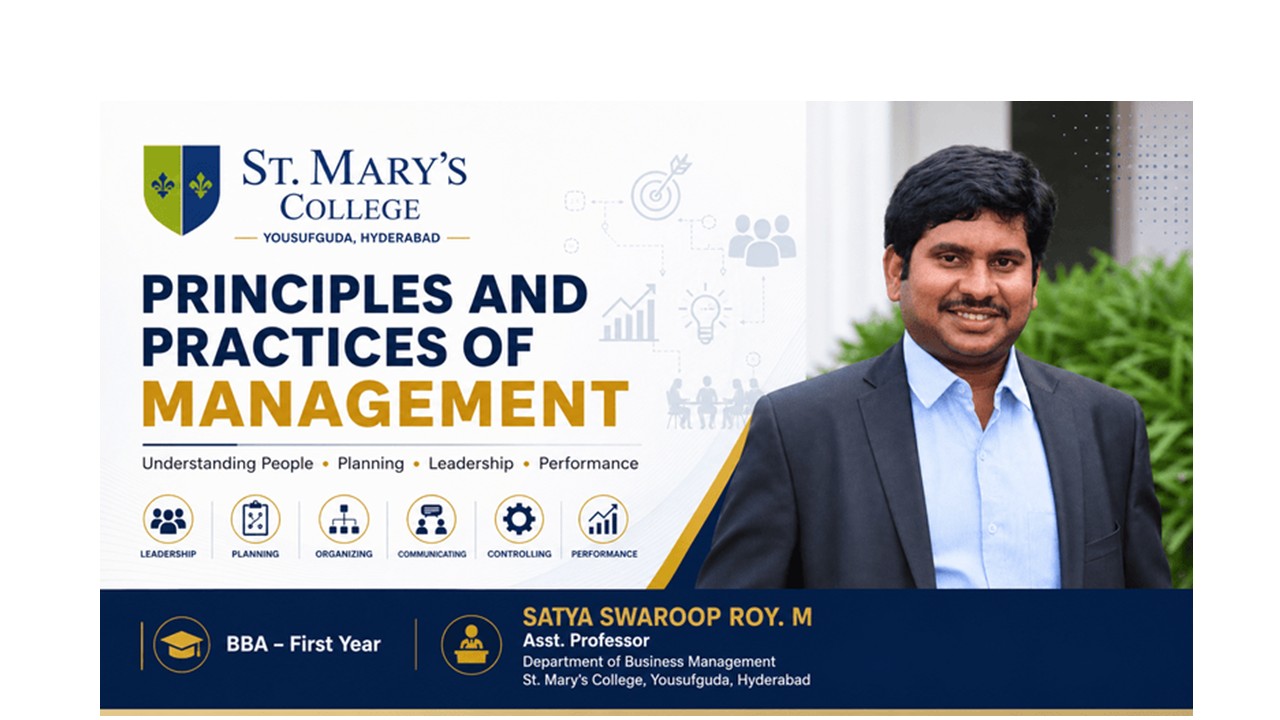
- Teacher: SATYA SWAROOP ROY MEDAPATI
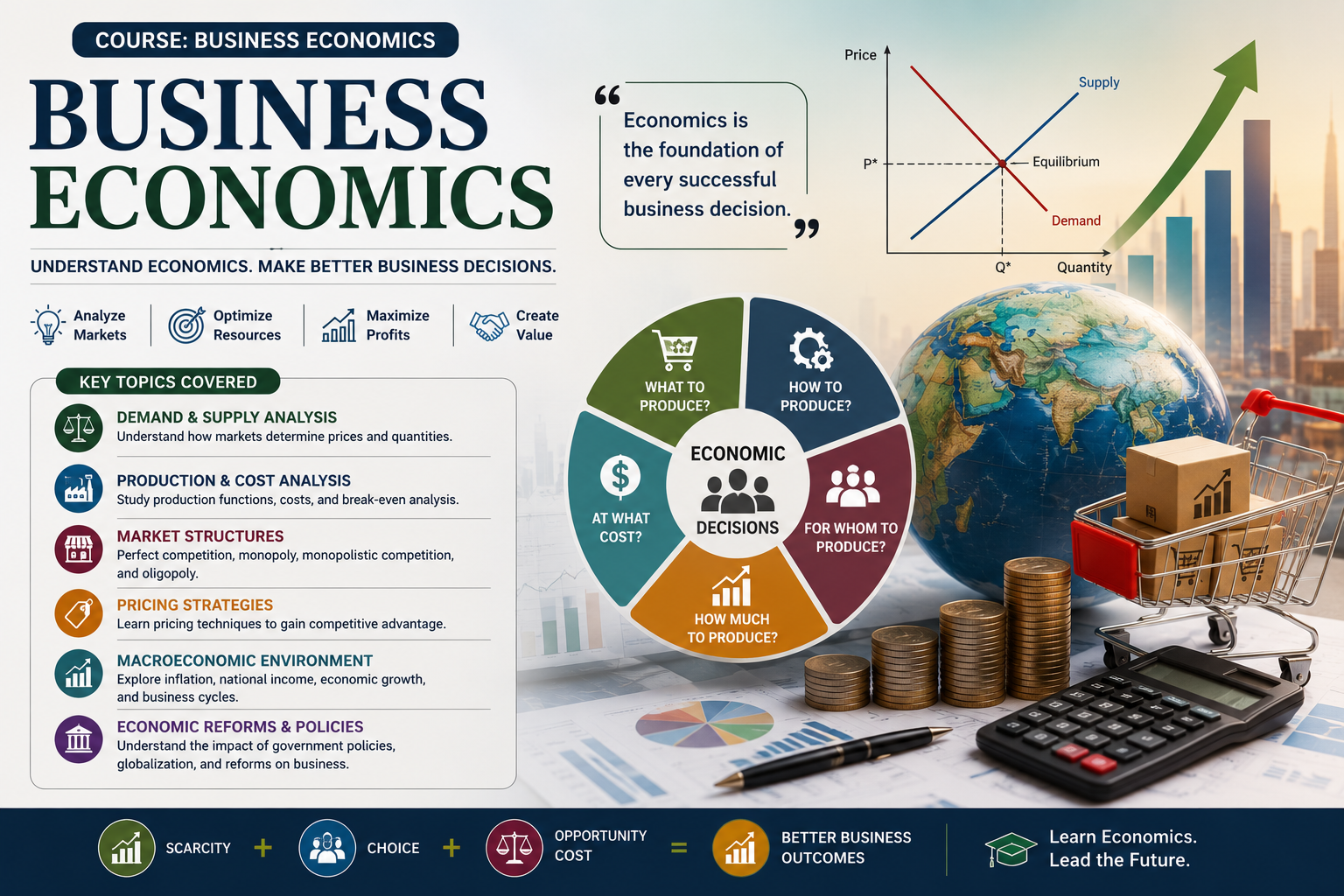
This course provides an overview of the core concepts of business economics, including demand and supply analysis, production and cost theories, market structures, pricing strategies, and the macroeconomic environment. It also examines the impact of economic reforms, inflation, national income, and government policies on business operations and decision-making.
- Teacher: Dr SHIKHA SHARMA