Course Summary
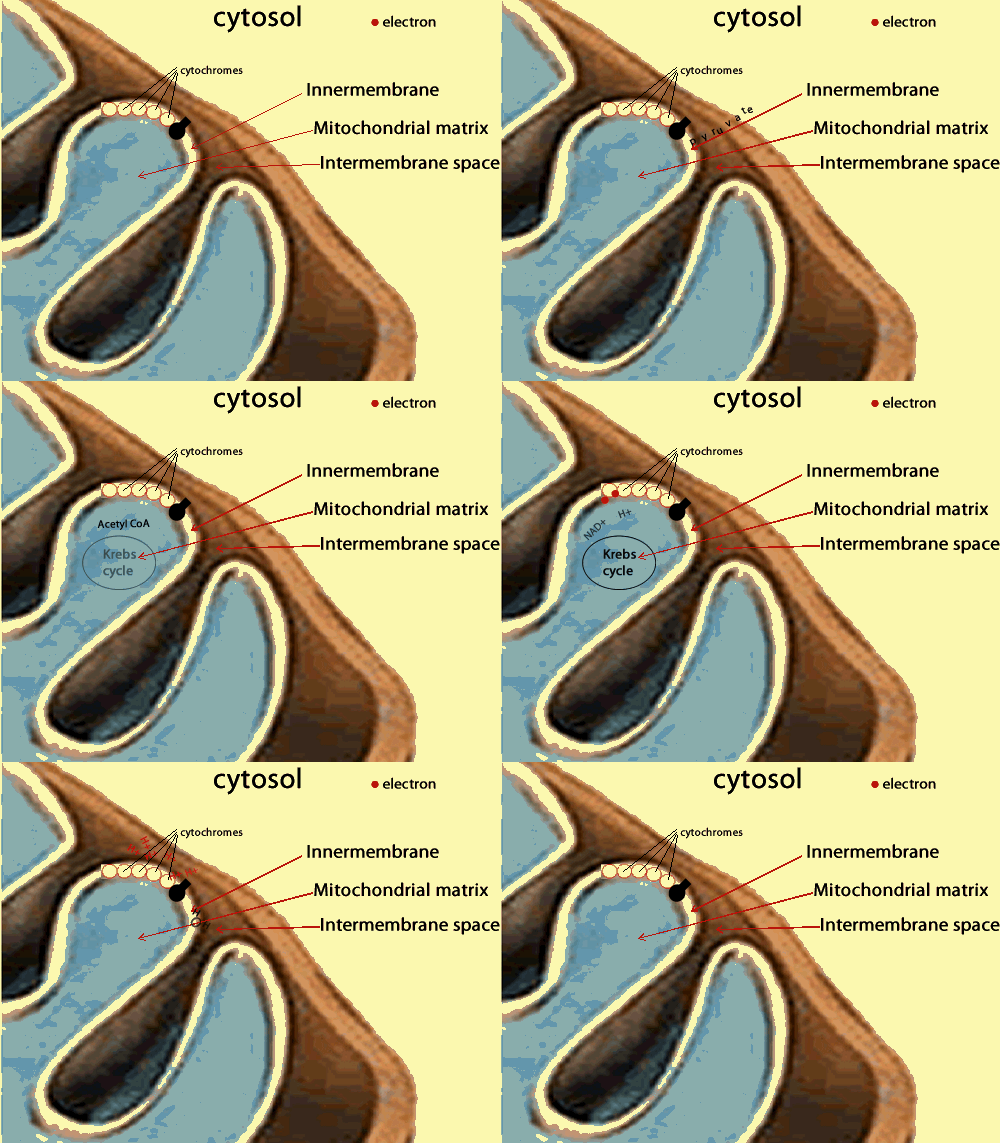
This course aims at understanding the essential metabolic functions of the human organism as well as and the molecular & biochemical basis of human diseases through analysis , the mechanisms of production, consumption and storage of energy, intermediary metabolism of main biomolecules and its regulatory mechanisms.
- Teacher: Dr. PRATHYUSHA YAMARTHI
This course introduces the basic chemistry behind everyday cosmetics and processed foods. Students learn the composition, preparation and uses of common cosmetic products along with the role of essential oils in the cosmetic industry. The course also covers food processing methods, additives, preservatives and their effects on nutrition.

- Teacher: Dr. SATABDI ROY
The General English course addresses the language needs of the students at the undergraduate level. The focus will be on five categories: Poetry, Prose, Pronunciation, Vocabulary, and Grammar. In addition to these, the last two segments of each unit are centered on the reading, speaking, and writing skills of the students. Overall the course will focus on skills acquisition with an added emphasis on the critical thinking faculties of the students concerning academic, political, literary, and ethical concepts. The syllabus has been designed to improve the communication skills of undergraduate students as a part of a comprehensive and holistic development that includes ethical, societal, and cultural concerns.
- Teacher: Dr SAIKIRAN D
- Teacher: Dr Chris Lenina Peters
This course provides a comprehensive exploration of core concepts in Inorganic, Organic, Physical, and General Chemistry. Key topics include coordination compounds, crystal field theory, and bioinorganic chemistry, with a focus on the roles of metal ions in biological systems. The organic chemistry delves into the structures, properties, and synthesis of carbohydrates, amino acids, proteins, and heterocyclic compounds. Physical Chemistry emphasizes reaction kinetics, mechanisms, and photochemical processes. General Chemistry addresses bonding theories in metals, carbanion reactions, and the principles and applications of colloids and adsorption. The course integrates theoretical foundations with practical examples, highlighting applications in analysis, industry, and biology.
- Teacher: Dr SHAROL SEBASTIAN
Bioinformatics or computational biology and Biostatistics is the use of mathematical and informational
techniques, including statistics, to solve biological problems, usually by creating or
using computer programs, mathematical models or both. One of the main areas of
bioinformatics is the data mining and analysis of the data gathered by the various
genome projects. Other areas are sequence alignment, protein structure prediction,
systems biology, protein-protein interactions in analysing complex biological data and solving biological problems.

- Teacher: Dr K. DEEPTHI PRIYA